 gdz.by


I. Reading, страница 169, часть 2 - гдз по английскому языку 9 класс учебник Демченко, Юхнель
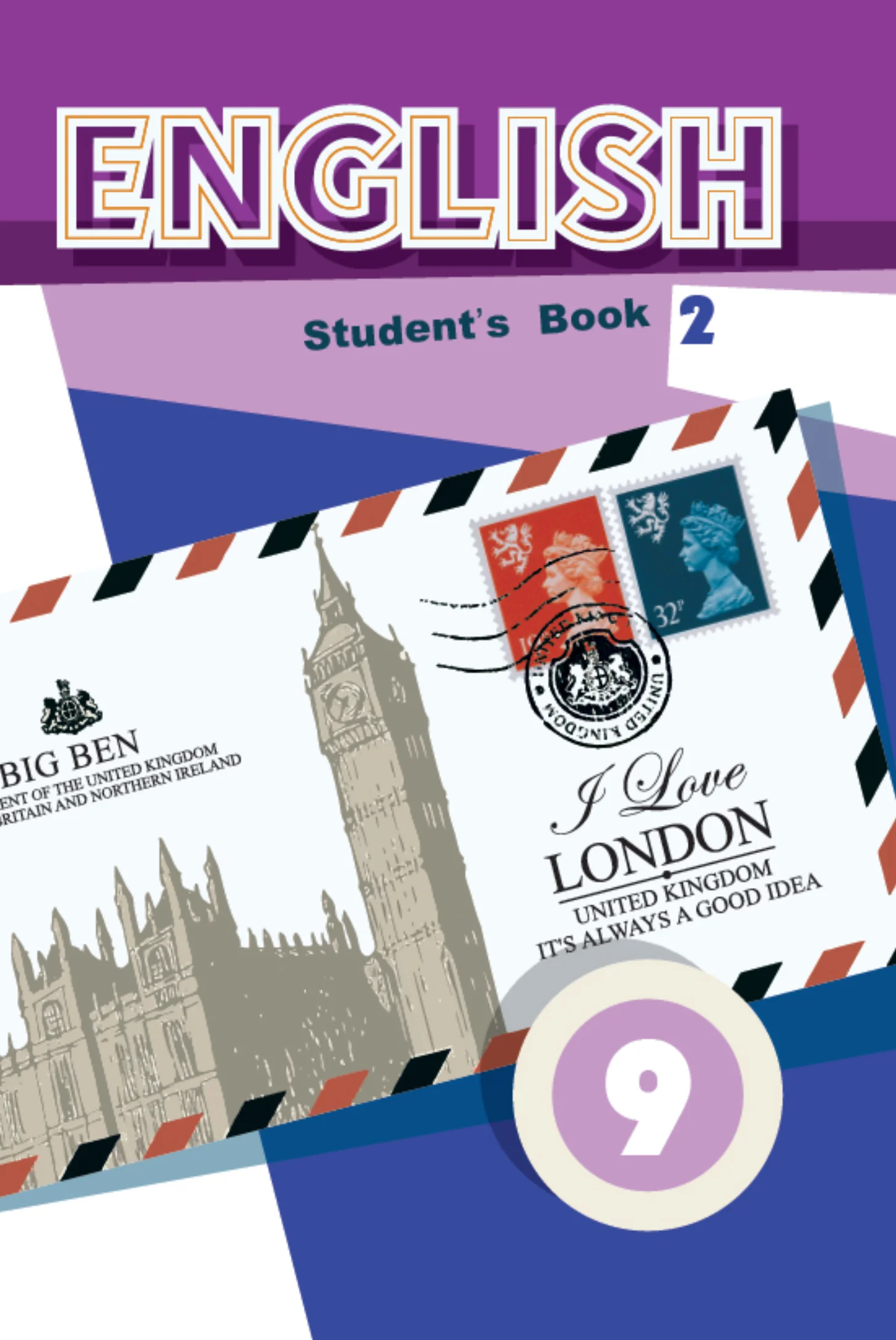
Авторы: Демченко Н. В., Юхнель Н. В., Романчук В. Р., Малиновская Е. А., Севрюкова Т. Ю.
Тип: Student's book (Учебник)
Издательство: Вышэйшая школа
Год издания: 2022 - 2026
Уровень обучения: повышенный
Часть: 2
Цвет обложки: белый, фиолетовый
ISBN: 978-985-06-3444-3 (ч. 1), 978-985-06-3471-9 (ч. 2), 978-985-06-3443-6 (общ.)
Допущено Министерством образования Республики Беларусь
Популярные ГДЗ в 9 классе








Часть 2. Progress check. Unit 6. Progress check - страница 169.
 III. Speaking
I. Reading (с. 169)
Условие. I. Reading (с. 169)
скриншот условия

Communicative area
testing your reading, listening, and speaking skills
I. READING
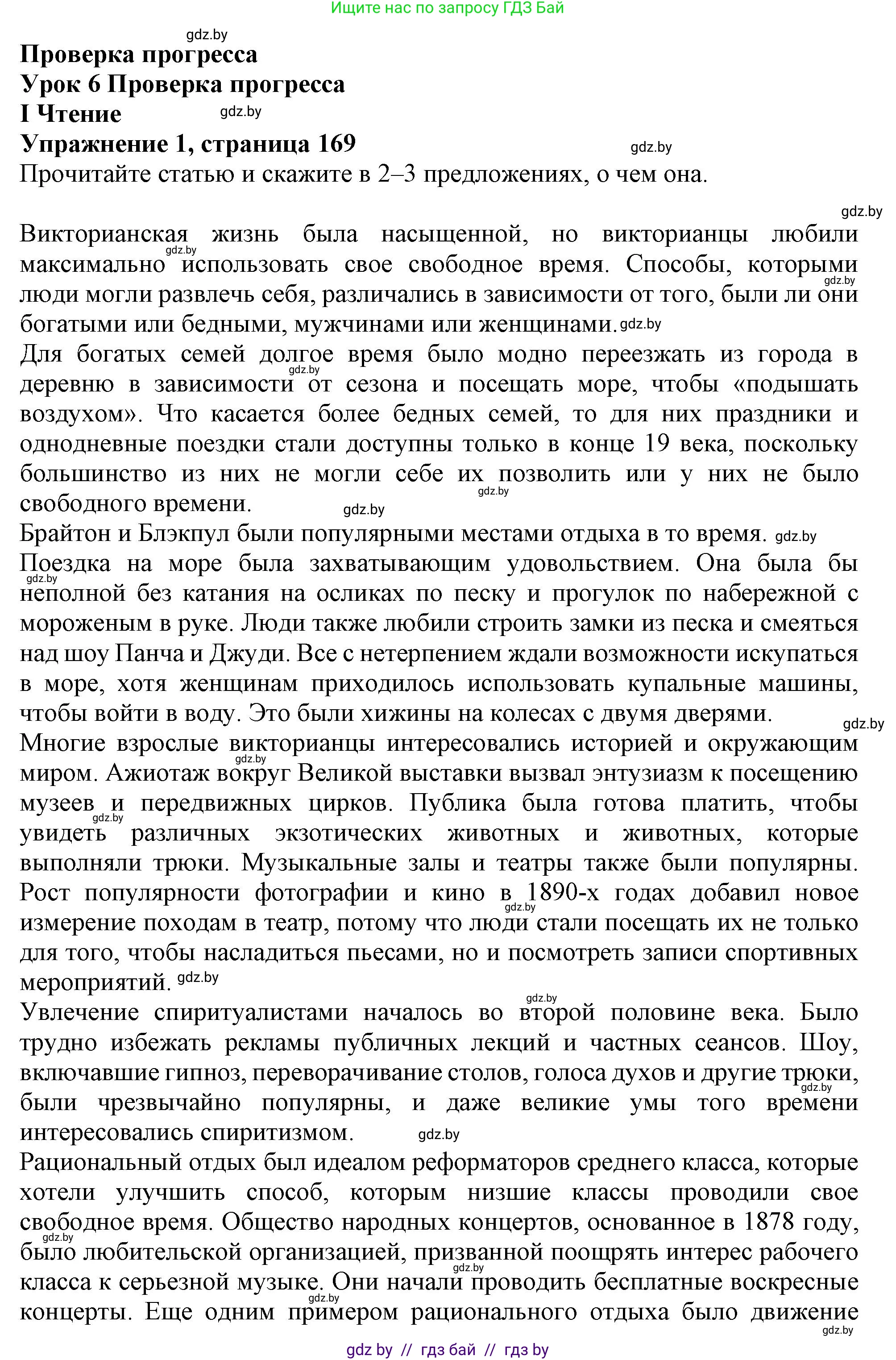
1. Read the article and say in 2–3 sentences what it is about.
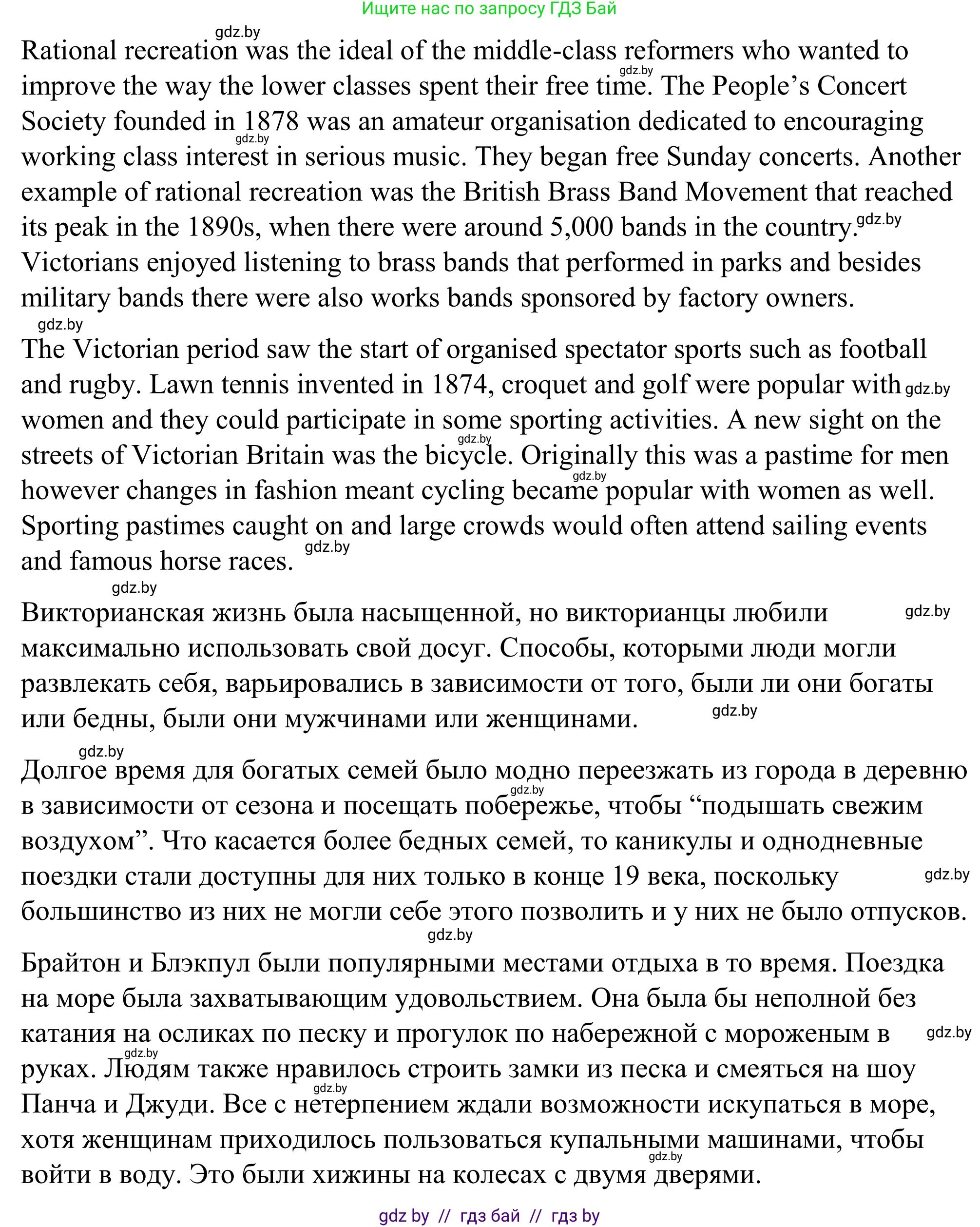
Victorian life was busy, but Victorians liked to make the most of their leisure time. The ways in which people could entertain themselves varied depending on whether they were rich or poor, male or female.
It had long been fashionable for wealthy families to move between town and country, depending on the season and to visit the seaside to “take the air.” As for poorer families, holidays and day trips became accessible to them not until the late 19th century as most of them could neither afford them nor did they have time off.
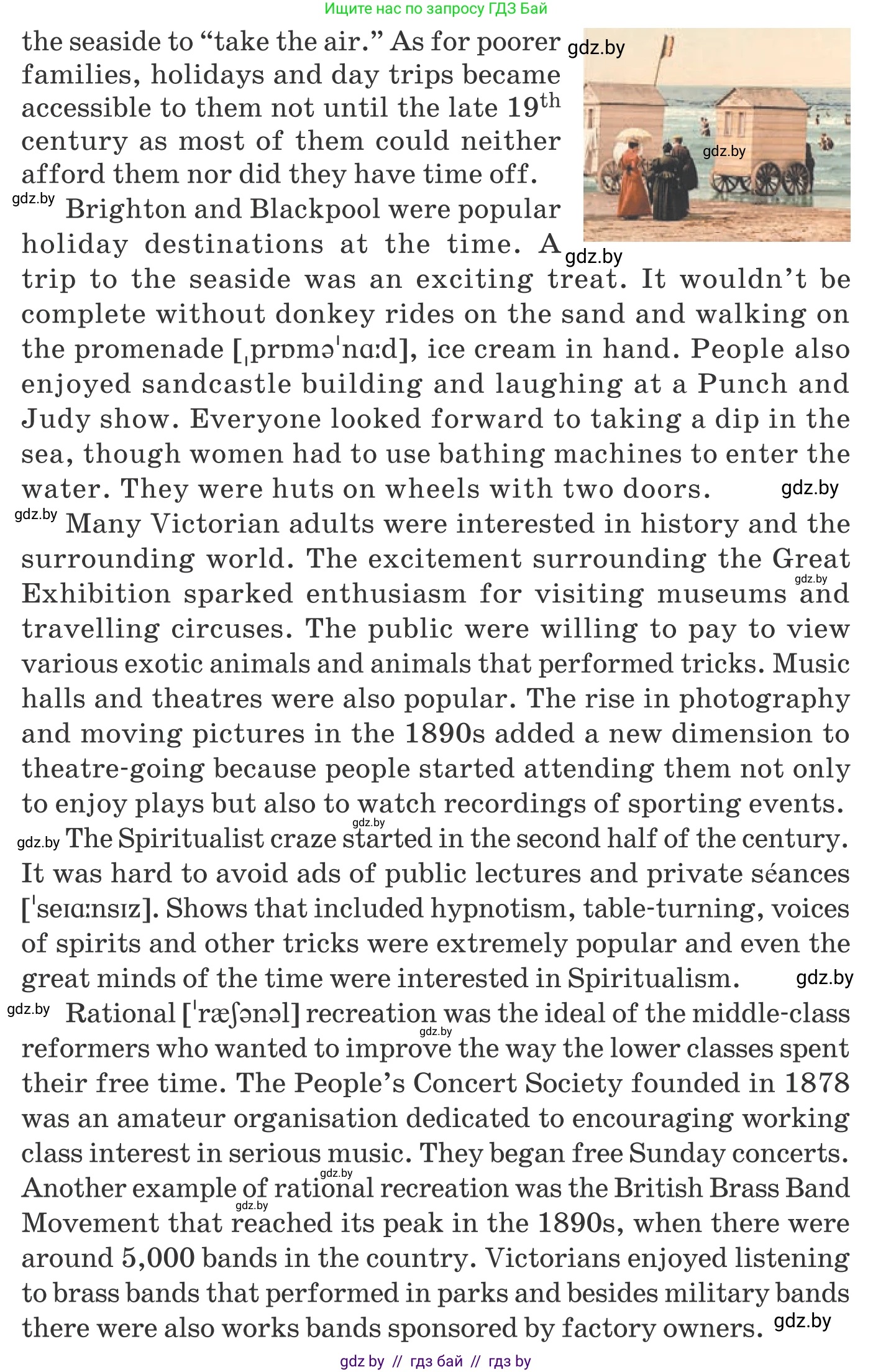
Brighton and Blackpool were popular holiday destinations at the time. A trip to the seaside was an exciting treat. It wouldn’t be complete without donkey rides on the sand and walking on the promenade [ˌprɒməˈnɑːd], ice cream in hand. People also enjoyed sandcastle building and laughing at a Punch and Judy show. Everyone looked forward to taking a dip in the sea, though women had to use bathing machines to enter the water. They were huts on wheels with two doors.
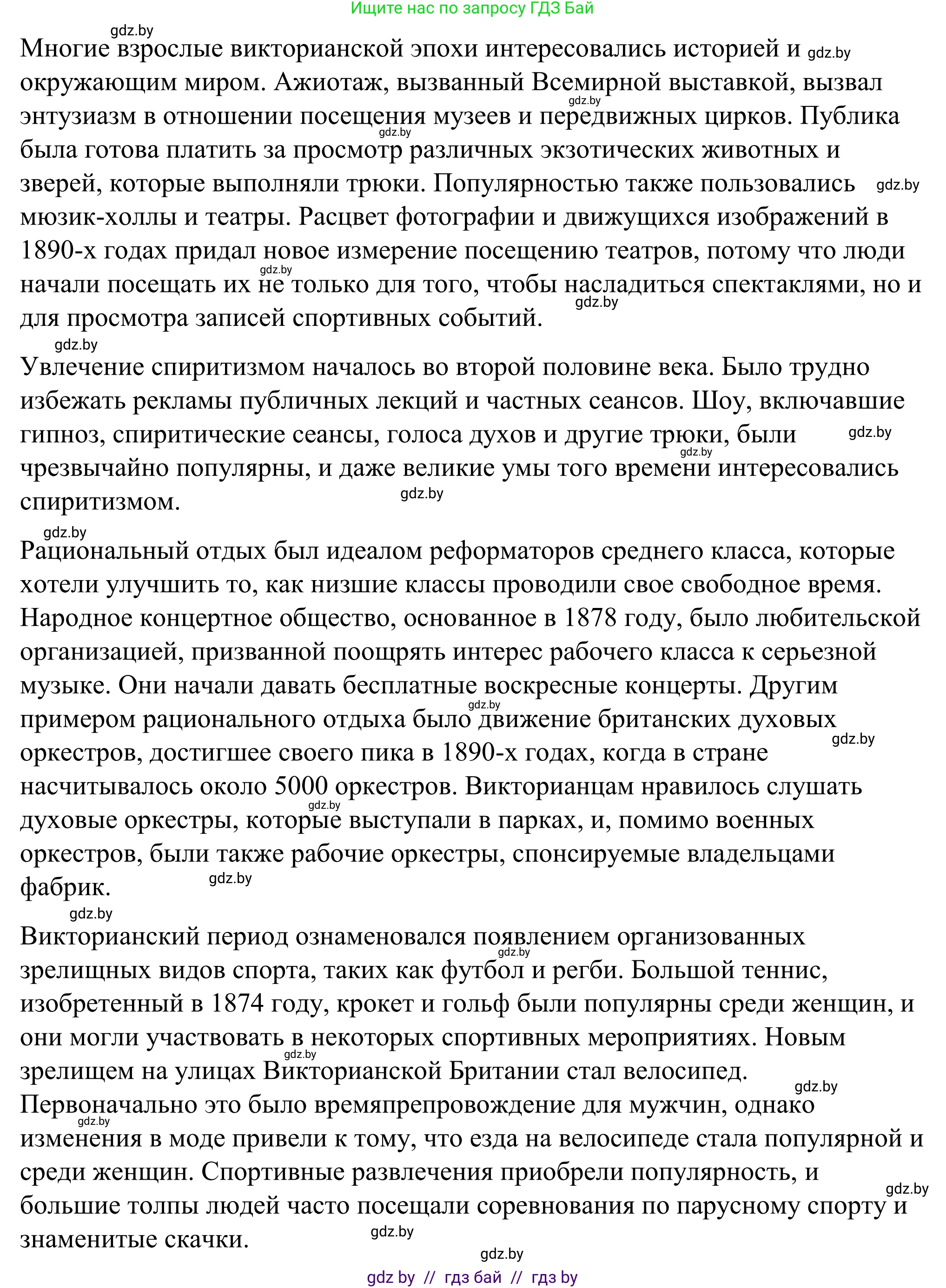
Many Victorian adults were interested in history and the surrounding world. The excitement surrounding the Great Exhibition sparked enthusiasm for visiting museums and travelling circuses. The public were willing to pay to view various exotic animals and animals that performed tricks. Music halls and theatres were also popular. The rise in photography and moving pictures in the 1890s added a new dimension to theatre-going because people started attending them not only to enjoy plays but also to watch recordings of sporting events.
The Spiritualist craze started in the second half of the century. It was hard to avoid ads of public lectures and private séances [ˈseɪənsɪz]. Shows that included hypnotism, table-turning, voices of spirits and other tricks were extremely popular and even the great minds of the time were interested in Spiritualism.
Rational [ˈræʃənəl] recreation was the ideal of the middle-class reformers who wanted to improve the way the lower classes spent their free time. The People’s Concert Society founded in 1878 was an amateur organisation dedicated to encouraging working class interest in serious music. They began free Sunday concerts. Another example of rational recreation was the British Brass Band Movement that reached its peak in the 1890s, when there were around 5,000 bands in the country. Victorians enjoyed listening to brass bands that performed in parks and besides military bands there were also works bands sponsored by factory owners.
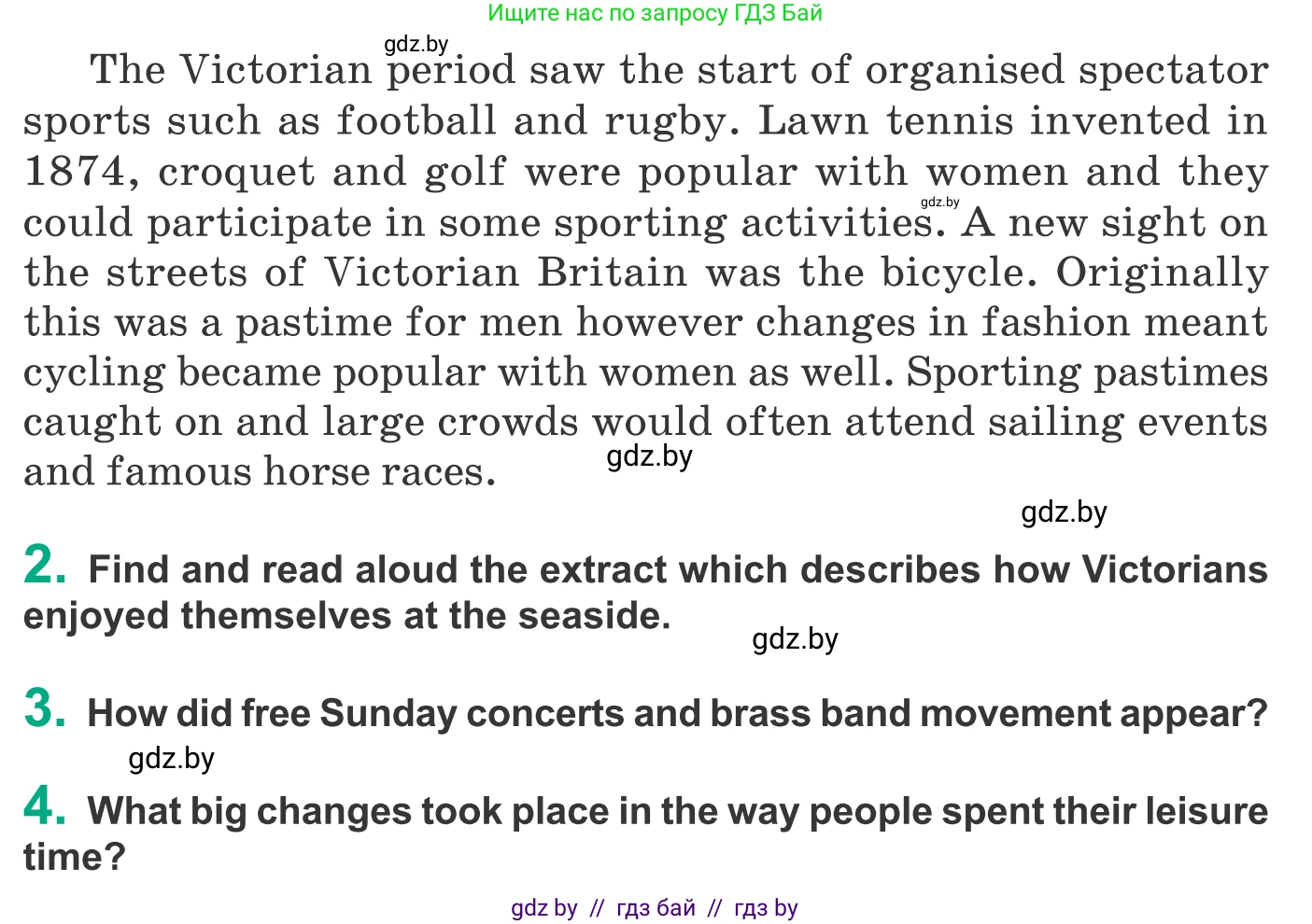
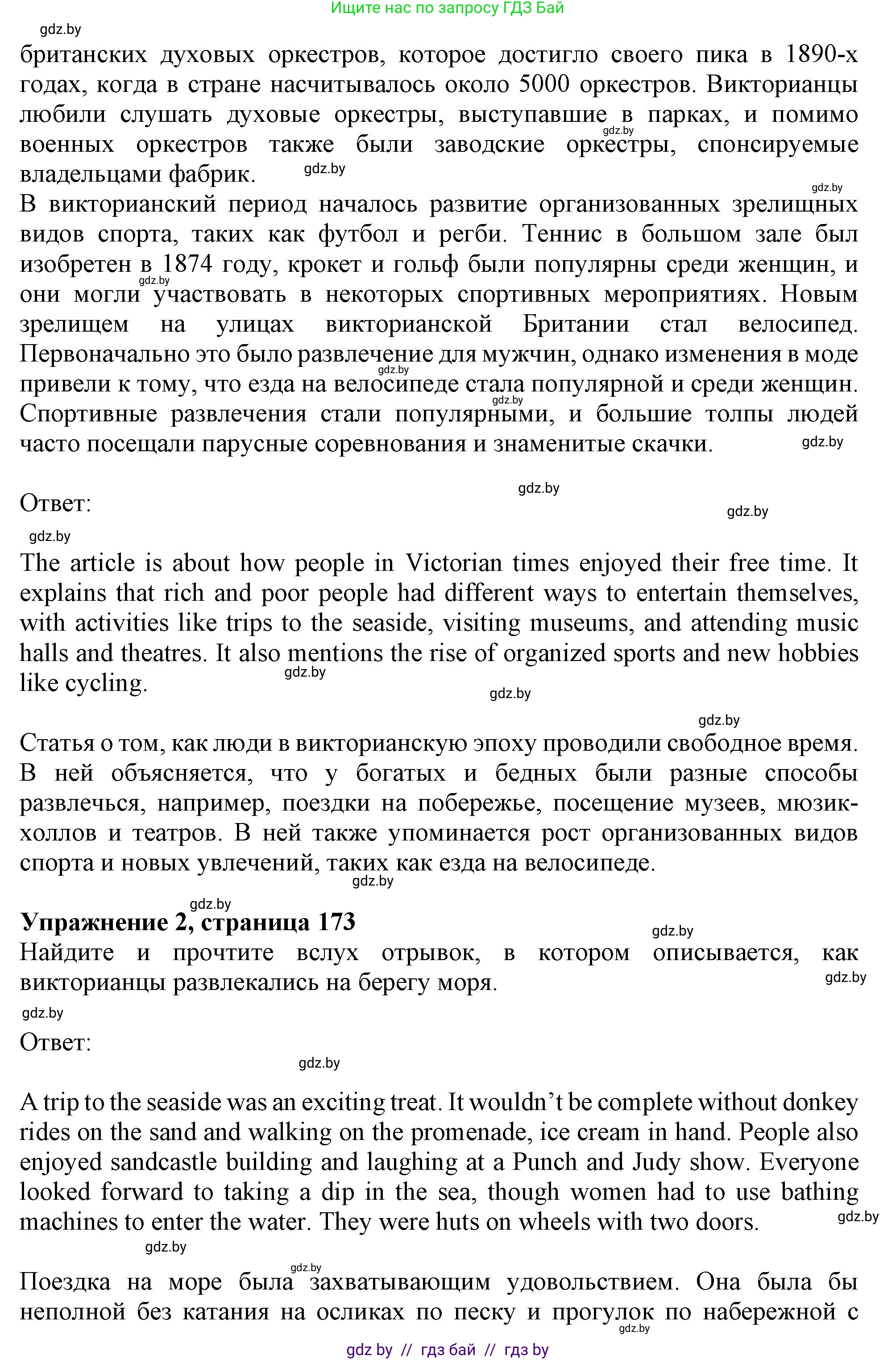
The Victorian period saw the start of organised spectator sports such as football and rugby. Lawn tennis invented in 1874, croquet and golf were popular with women and they could participate in some sporting activities. A new sight on the streets of Victorian Britain was the bicycle. Originally this was a pastime for men however changes in fashion meant cycling became popular with women as well. Sporting pastimes caught on and large crowds would often attend sailing events and famous horse races.
2. Find and read aloud the extract which describes how Victorians enjoyed themselves at the seaside.
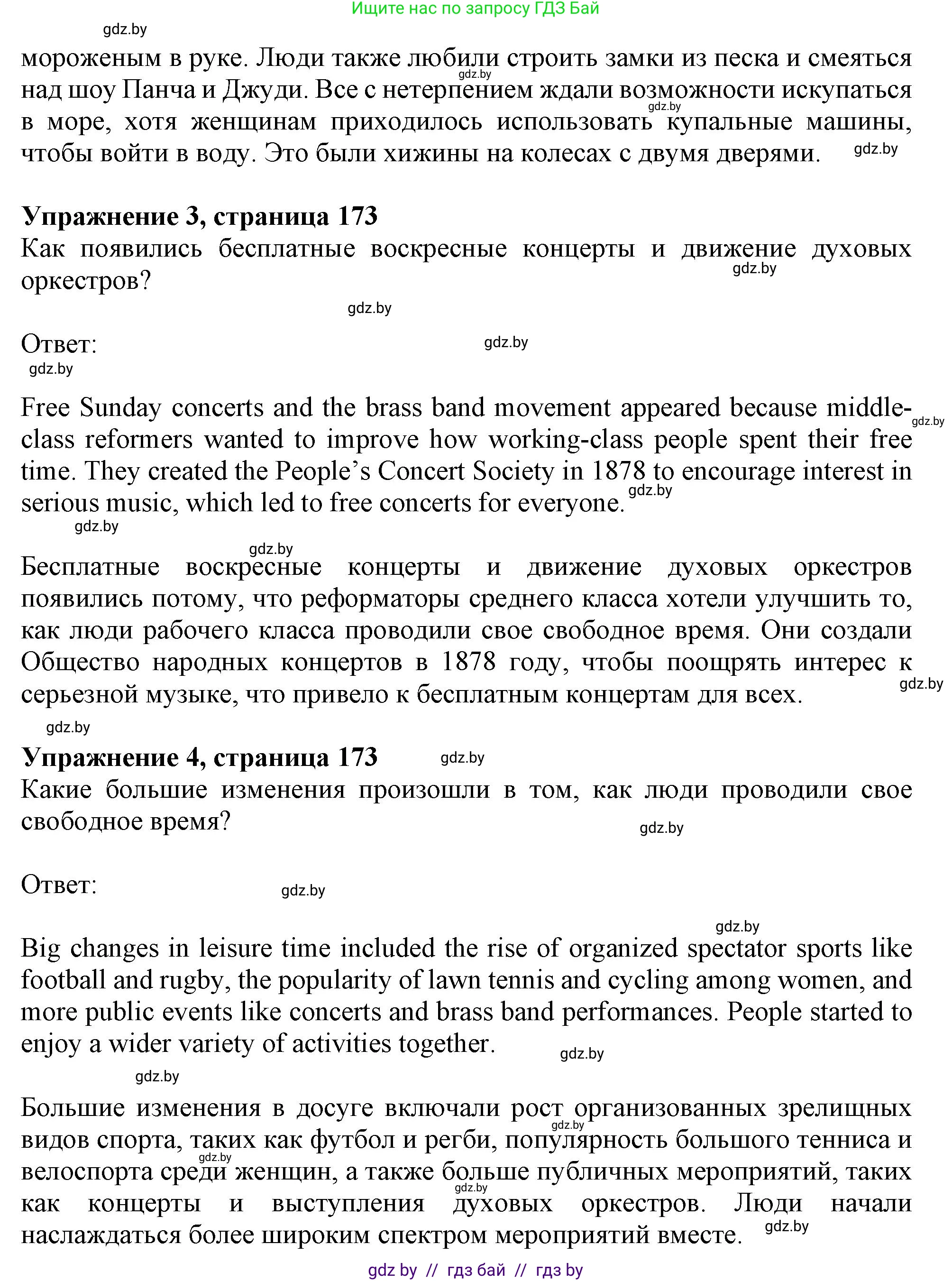
3. How did free Sunday concerts and brass band movement appear?
4. What big changes took place in the way people spent their leisure time?
Решение. I. Reading (с. 169)



Решение 2. I. Reading (с. 169)
Решение 3. I. Reading (с. 169)
1. Прочитайте статью и в 2-3 предложениях скажите, о чем она.
Ответ: The article is about how people in the Victorian era spent their leisure time. It covers a variety of activities available to different social classes, such as seaside holidays, visiting museums, enjoying concerts, and the rise of organised sports.
Перевод: Статья о том, как люди в викторианскую эпоху проводили свой досуг. Она охватывает разнообразные занятия, доступные разным социальным классам, такие как отдых на побережье, посещение музеев, концерты и зарождение организованного спорта.
2. Найдите и прочитайте вслух отрывок, в котором описывается, как викторианцы развлекались на побережье.
Ответ: A trip to the seaside was an exciting treat. It wouldn’t be complete without donkey rides on the sand and walking on the promenade, ice cream in hand. People also enjoyed sandcastle building and laughing at a Punch and Judy show.
Перевод: Поездка на море была захватывающим удовольствием. Она была бы неполной без катания на осликах по песку и прогулок по набережной с мороженым в руках. Люди также наслаждались строительством песчаных замков и смеялись над представлением "Панч и Джуди".
3. Как появились бесплатные воскресные концерты и движение духовых оркестров?
Ответ: They appeared as part of "rational recreation", an ideal of middle-class reformers who wanted to improve how the lower classes spent their free time.
Перевод: Они появились как часть "рационального отдыха" — идеала реформаторов из среднего класса, которые хотели улучшить то, как низшие классы проводили свое свободное время.
4. Какие большие изменения произошли в том, как люди проводили свой досуг?
Ответ: Big changes included the start of organised spectator sports like football and rugby, the rise of "rational recreation" aimed at the working class, and the popularity of new pastimes like cycling, which became accessible to women.
Перевод: Большие изменения включали зарождение организованных зрительских видов спорта, таких как футбол и регби, подъем "рационального отдыха", нацеленного на рабочий класс, и популярность новых развлечений, таких как езда на велосипеде, которая стала доступна и женщинам.
Другие задания:

2
стр. 1633
стр. 1634
стр. 1651
стр. 166I. Reading
стр. 167II. Listening
стр. 169III. Speaking
стр. 169I. Reading
стр. 169II. Listening
стр. 171III. Speaking
стр. 171I. Reading
стр. 172II. Listening
стр. 173III. Speaking
стр. 173I. Reading
стр. 174II. Listening
стр. 175
к содержанию
список заданийПомогло решение? Оставьте отзыв в комментариях ниже.
Присоединяйтесь к Телеграм-группе @gdz_by_belarus
ПрисоединитьсяМы подготовили для вас ответ c подробным объяснением домашего задания по английскому языку за 9 класс, для упражнения I. Reading расположенного на странице 169 для 2-й части к Учебник (Student's book) 2022 года издания для учащихся школ и гимназий.
Теперь на нашем сайте ГДЗ.ТОП вы всегда легко и бесплатно найдёте условие с правильным ответом на вопрос «Как решить ДЗ» и «Как сделать» задание по английскому языку к упражнению I. Reading (с. 169), авторов: Демченко (Наталья Валентиновна), Юхнель (Наталья Валентиновна), Романчук (Вероника Романовна), Малиновская (Елена Александровна), Севрюкова (Татьяна Юрьевна), 2-й части повышенный уровень обучения учебного пособия издательства Вышэйшая школа.