 gdz.by


Номер 2, страница 9 - гдз по английскому языку 11 класс учебник часть 1 Демченко, Бушуева
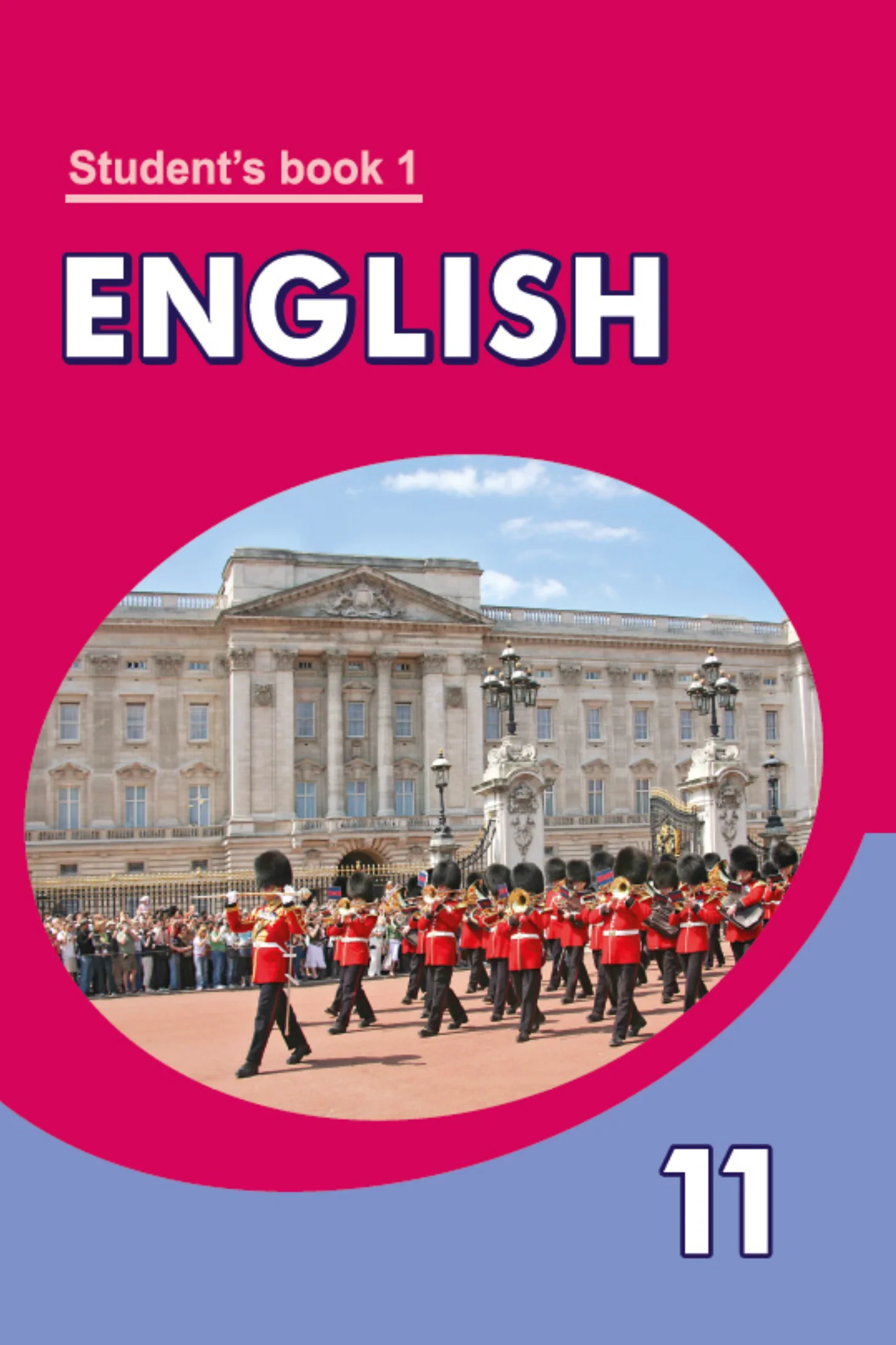
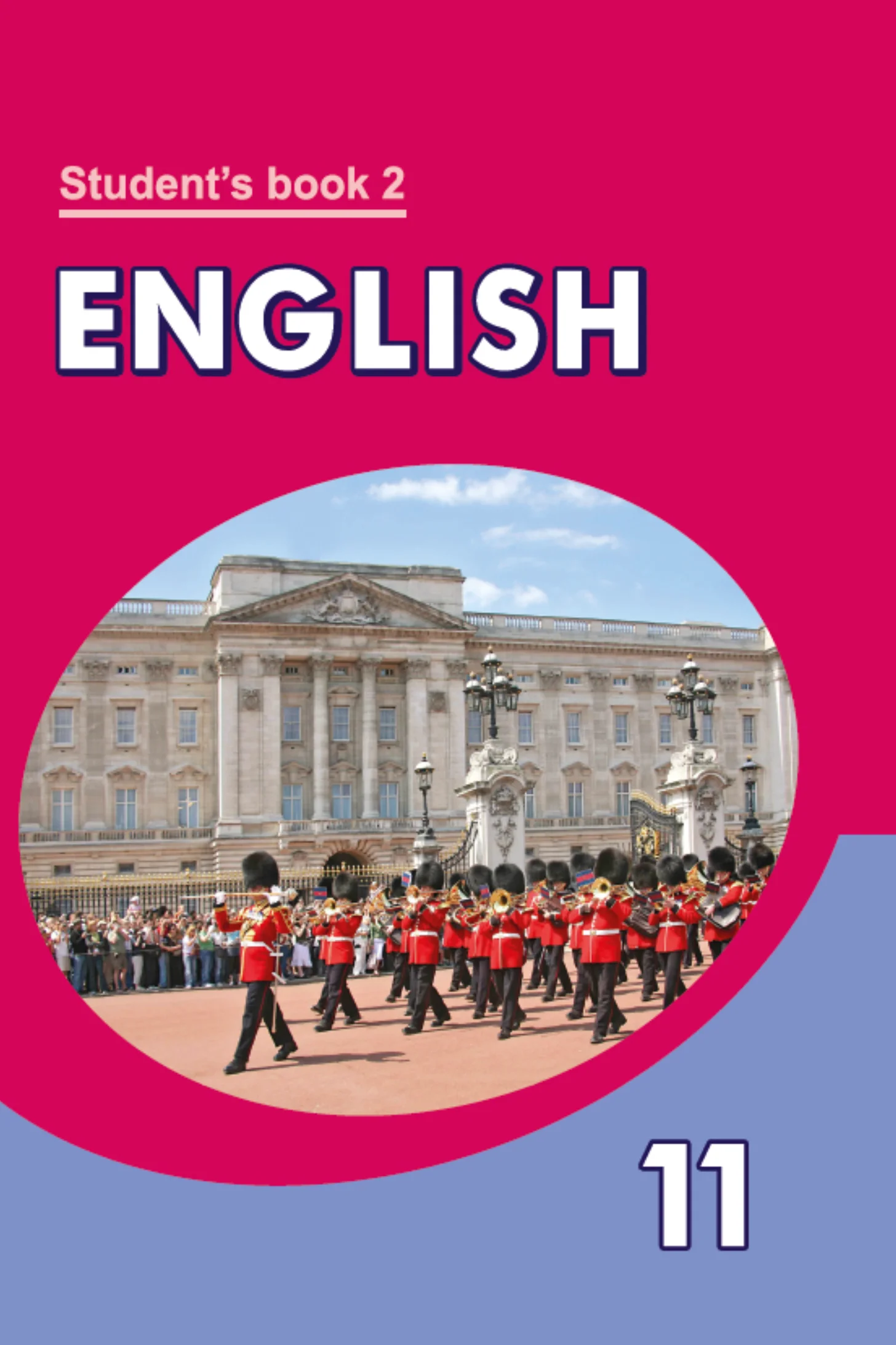
Авторы: Демченко Н. В., Бушуева Э. В., Севрюкова Т. Ю., Лапицкая Л. М., Романчук В. Р.
Тип: Student's book (Учебник)
Издательство: Вышэйшая школа
Год издания: 2022 - 2026
Часть: 1, 2
Цвет обложки: розовый, синий
ISBN: 978-985-06-3439-9 (ч. 1), 978-985-06-3466-5 (ч. 2), 978-985-06-3438-2 (общ.)
Допущено Министерством образования Республики Беларусь
Популярные ГДЗ в 11 классе











Приложение к книге. Optional Lessons. Unit 7. Tourism - номер 2, страница 9.
 №1
№1
№2 (с. 9)
Условие. №2 (с. 9)
скриншот условия

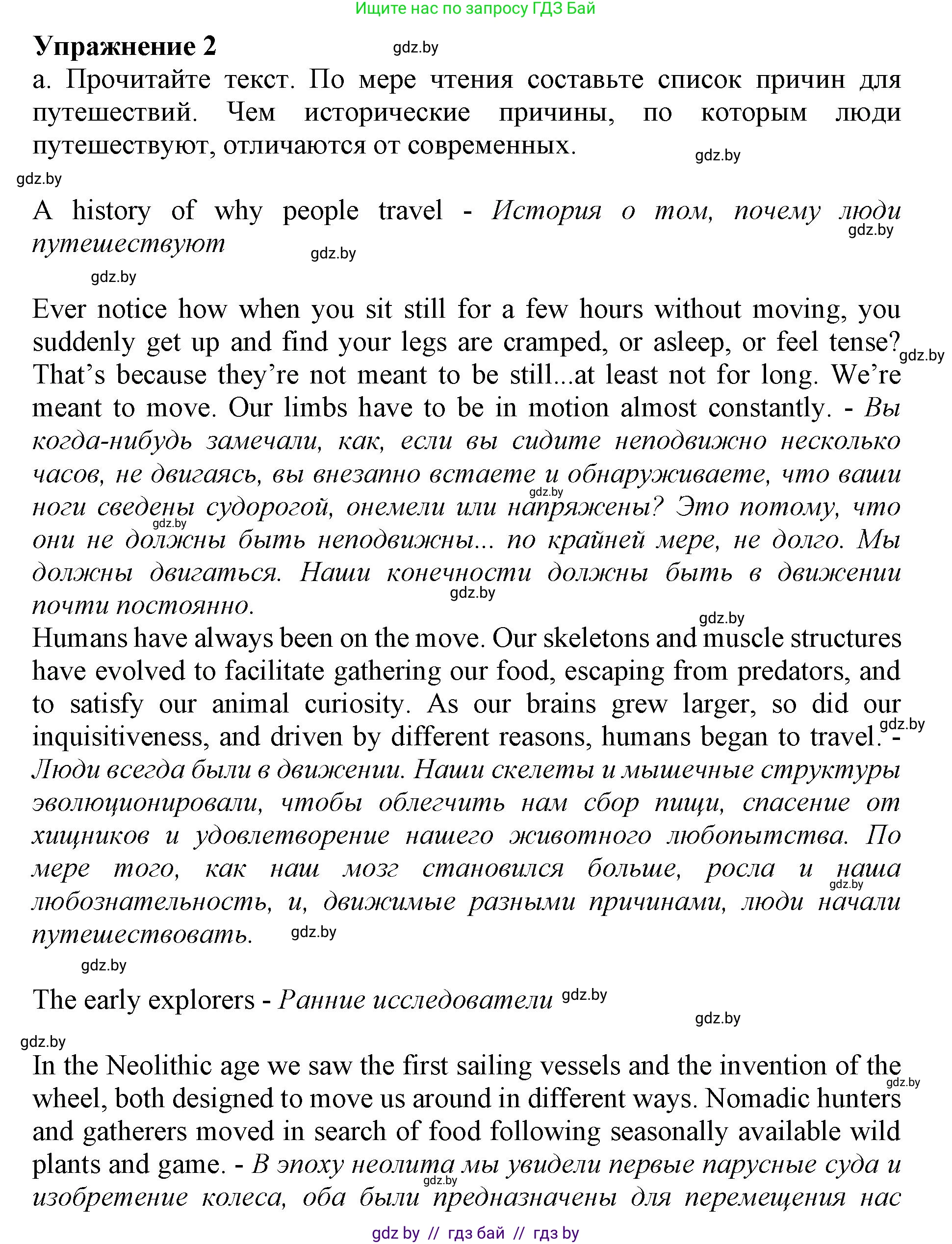
2. a. Read the text. As you are reading make a list of reasons for travelling. In what way are the historical reasons of why people travel different from the present-day ones.
A history of why people travel
Ever notice how when you sit still for a few hours without moving, you suddenly get up and find your legs are cramped, or a headache, or feel tense? That’s because they’re not meant to be still...at least not for long. We’re meant to move. Our limbs have to be in motion almost constantly.
Humans have always been on the move. Our skeletons and muscle structures have evolved to facilitate gathering our food, escaping from predators, and to satisfy our animal curiosity. As our brains grew larger, so did our inquisitiveness, and driven by different reasons, humans began to travel.
The early explorers
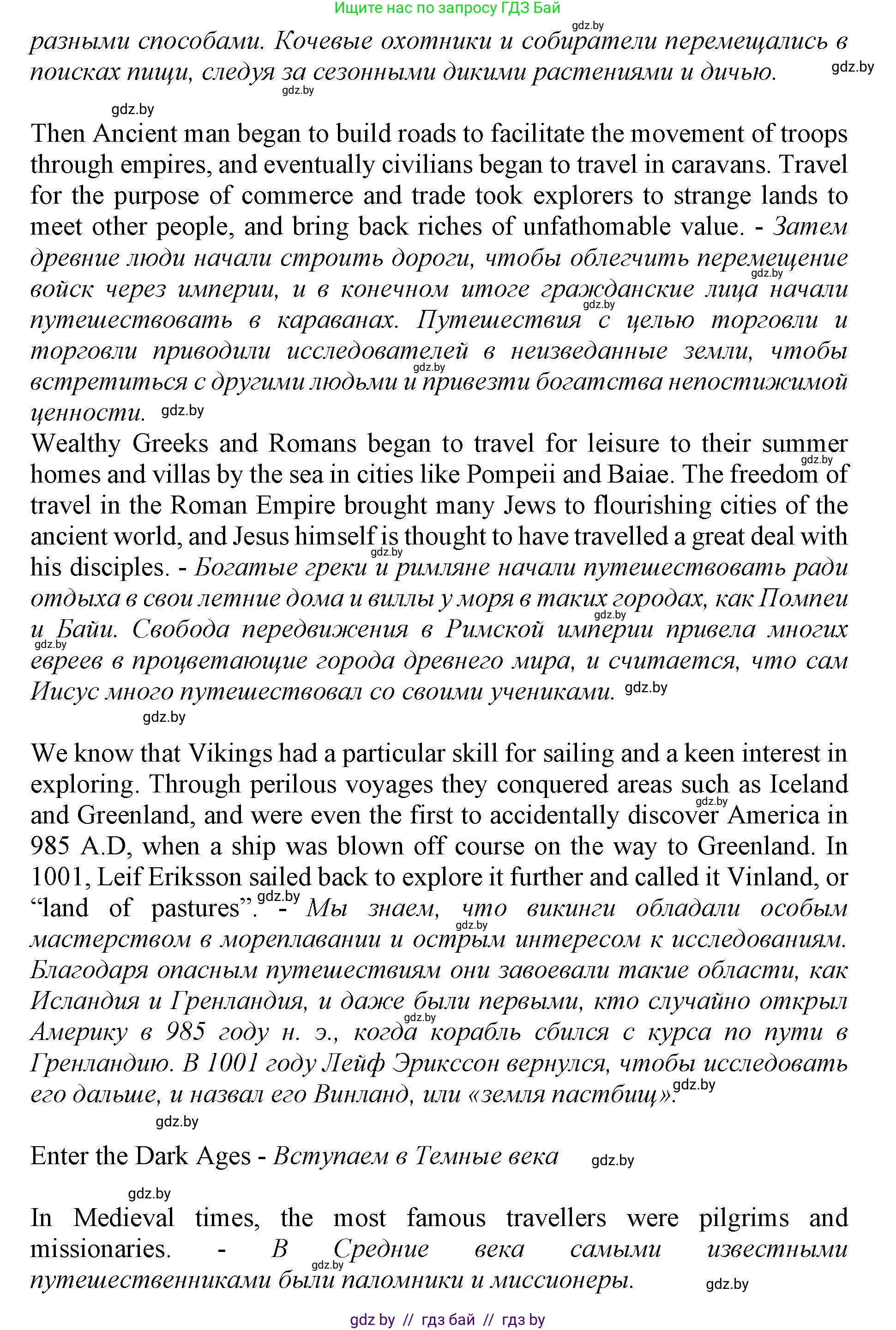
In the Neolithic age we saw the first sailing vessels and the invention of the wheel, both designed to move us around in different ways. Nomadic hunters and gatherers moved in search of food following seasonally available wild plants and game.
Then Ancient man began to build roads to facilitate the movement of troops through empires, and eventually civilians began to travel in caravans. Travel for the purpose of commerce and trade took explorers to strange lands to meet other people, and bring back riches of unfathomable value.
Wealthy Greeks and Romans began to travel for leisure to their summer homes and villas by the sea in cities like Pompeii and Baiae. The freedom of travel in the Roman Empire brought many Jews to flourishing cities of the ancient world, and Jesus himself is thought to have travelled a great deal with his disciples1.
We know that Vikings had a particular skill for sailing and a keen interest in exploring. Through perilous voyages they conquered areas such as Iceland and Greenland, and were even the first to accidentally discover America in 985 A.D. when a ship was blown off course on the way to Greenland. In 1001, Leif Eriksson sailed back to explore it further and called it Vinland, or “land of pastures”.
Enter the Dark Ages
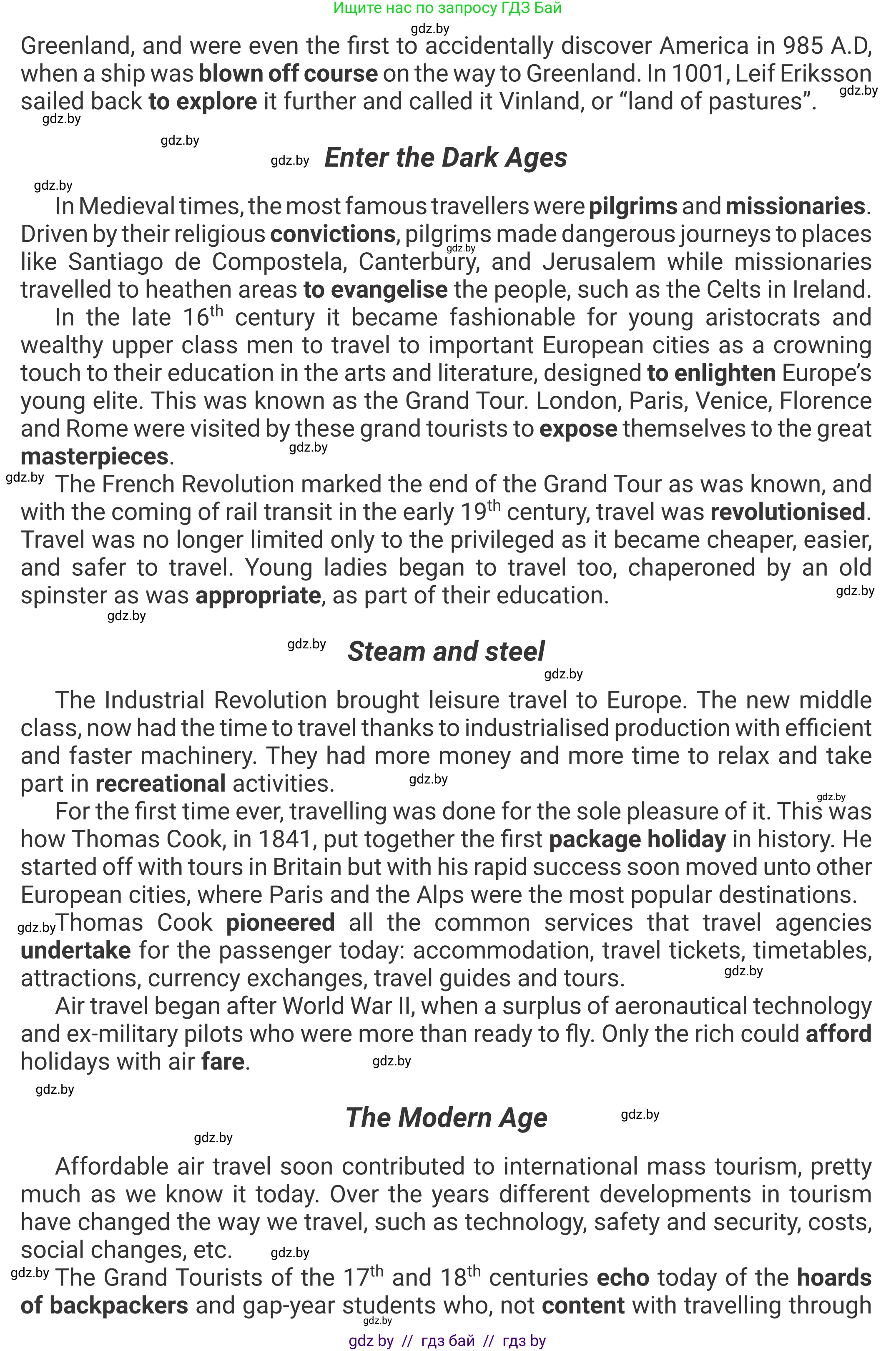
In Medieval times, the most famous travellers were pilgrims and missionaries. Driven by their religious convictions, pilgrims made dangerous journeys to places like Santiago de Compostela, Canterbury, and Jerusalem while missionaries travelled to heathen areas to evangelise the people, such as the Celts in Ireland.
In the late 16th century it became fashionable for young aristocrats and wealthy upper class men to travel to important European cities as a crowning touch to their education in the arts and literature, designed to enlighten Europe’s young elite. This was known as the Grand Tour. London, Paris, Venice, Florence and Rome were visited by these grand tourists to expose themselves to the great masterpieces.
The French Revolution marked the end of the Grand Tour as was known, and with the coming of rail transit in the early 19th century, travel was revolutionised. Travel was no longer limited only to the privileged as it became cheaper, easier, and safer to travel. Young ladies began to travel too, chaperoned by an old spinster as was appropriate, as part of their education.
Steam and steel
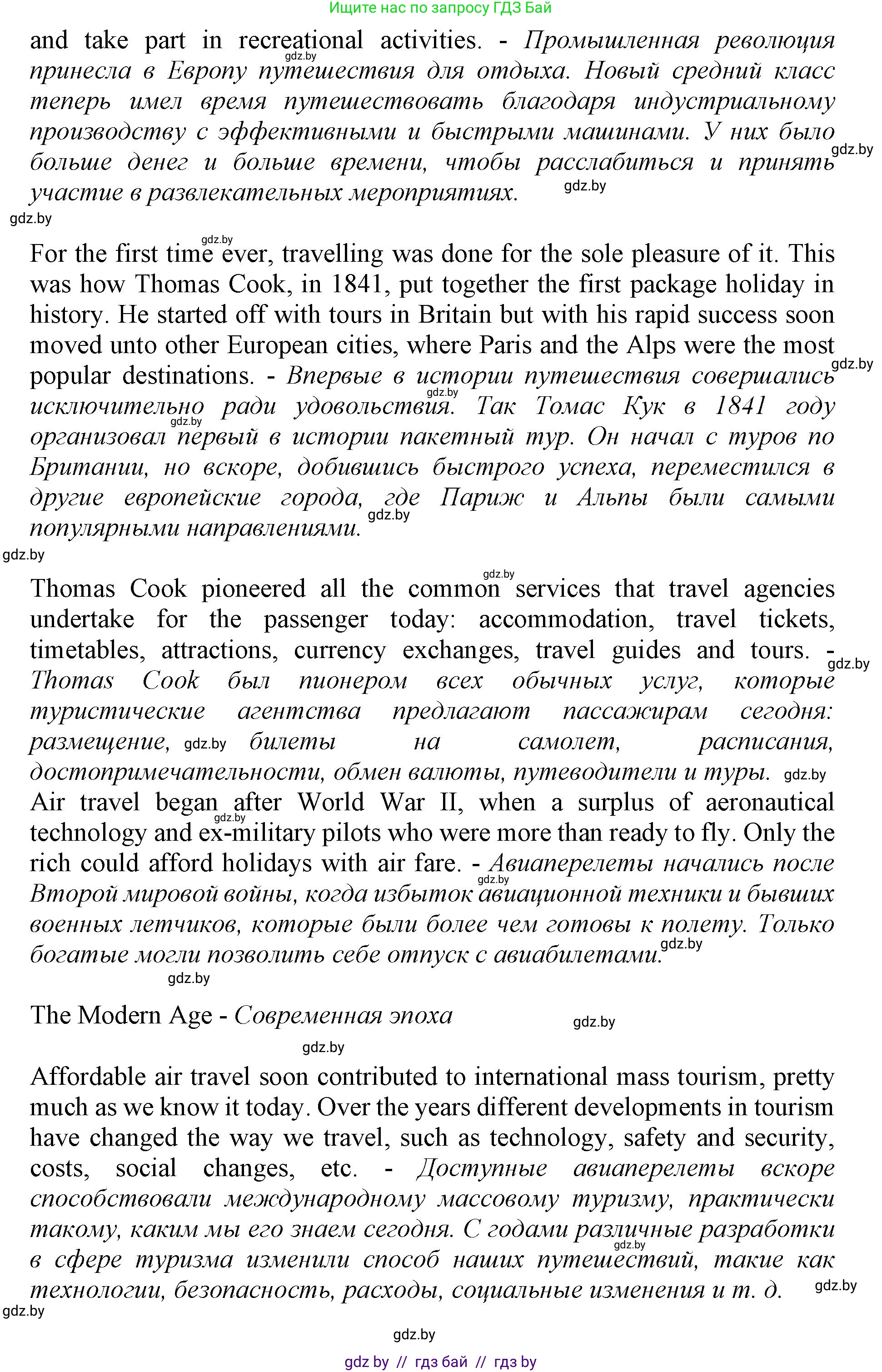
The Industrial Revolution brought leisure travel to Europe. The new middle class now had the time to travel thanks to industrialised production with efficient and faster machinery. They had more money and more time to relax and take part in recreational activities.
For the first time ever, travelling was done for the sole pleasure of it. This was how Thomas Cook, in 1841, put together the first package holiday in history. He started off with tours in Britain but with his rapid success soon moved unto other European cities, where Paris and the Alps were the most popular destinations.
Thomas Cook pioneered all the common services that travel agencies undertake for the passenger today: accommodation, travel tickets, timetables, attractions, currency exchanges, guides and tours.
Air travel began after World War II, when there was a surplus of aeronautical technology and ex-military pilots who were more than ready to fly. Only the rich could afford holidays with air fare.
The Modern Age
Affordable air travel soon contributed to international mass tourism, pretty much as we know it today. Over the years different developments in tourism have changed the way we travel, such as technology, safety and security, costs, social changes, etc.
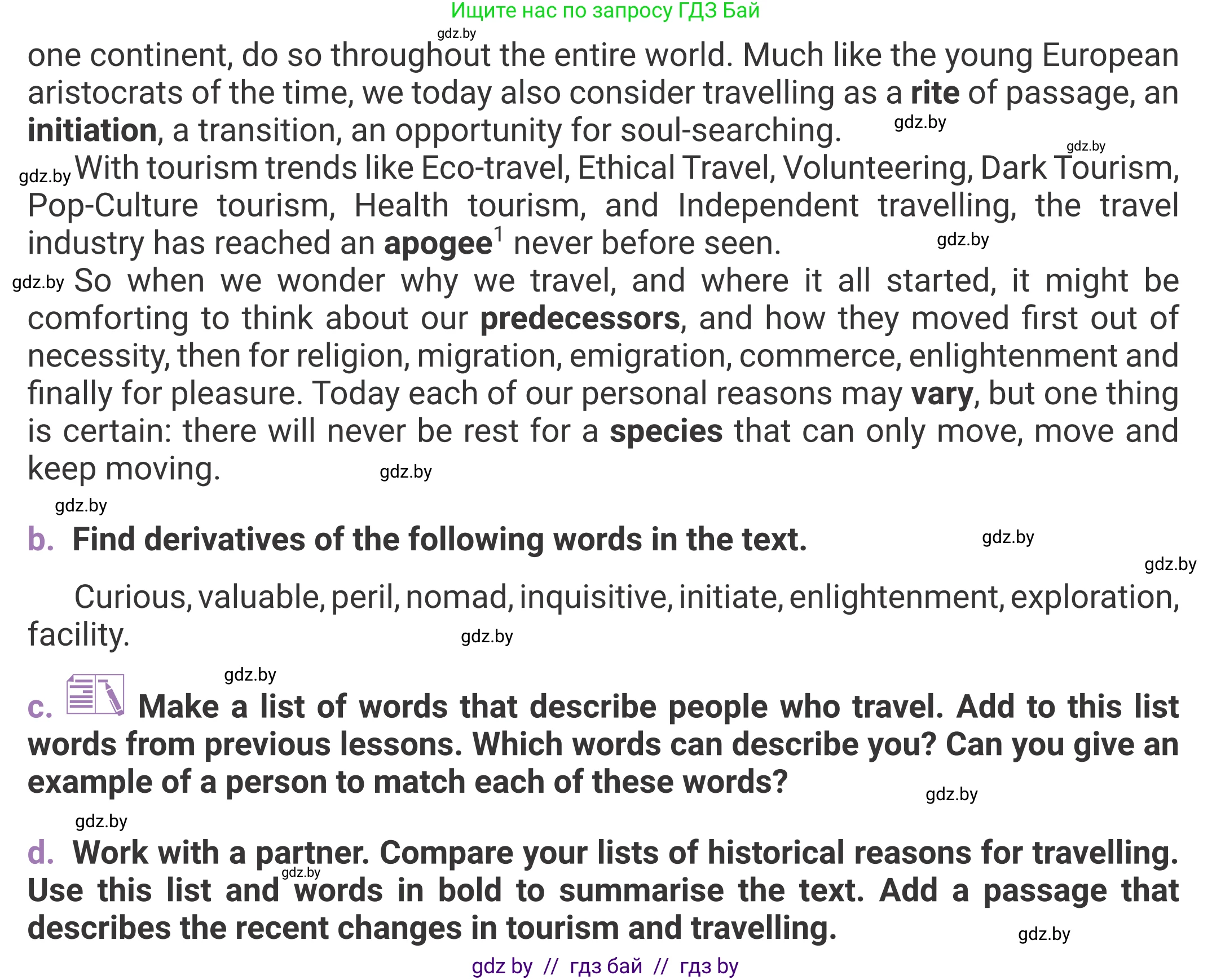
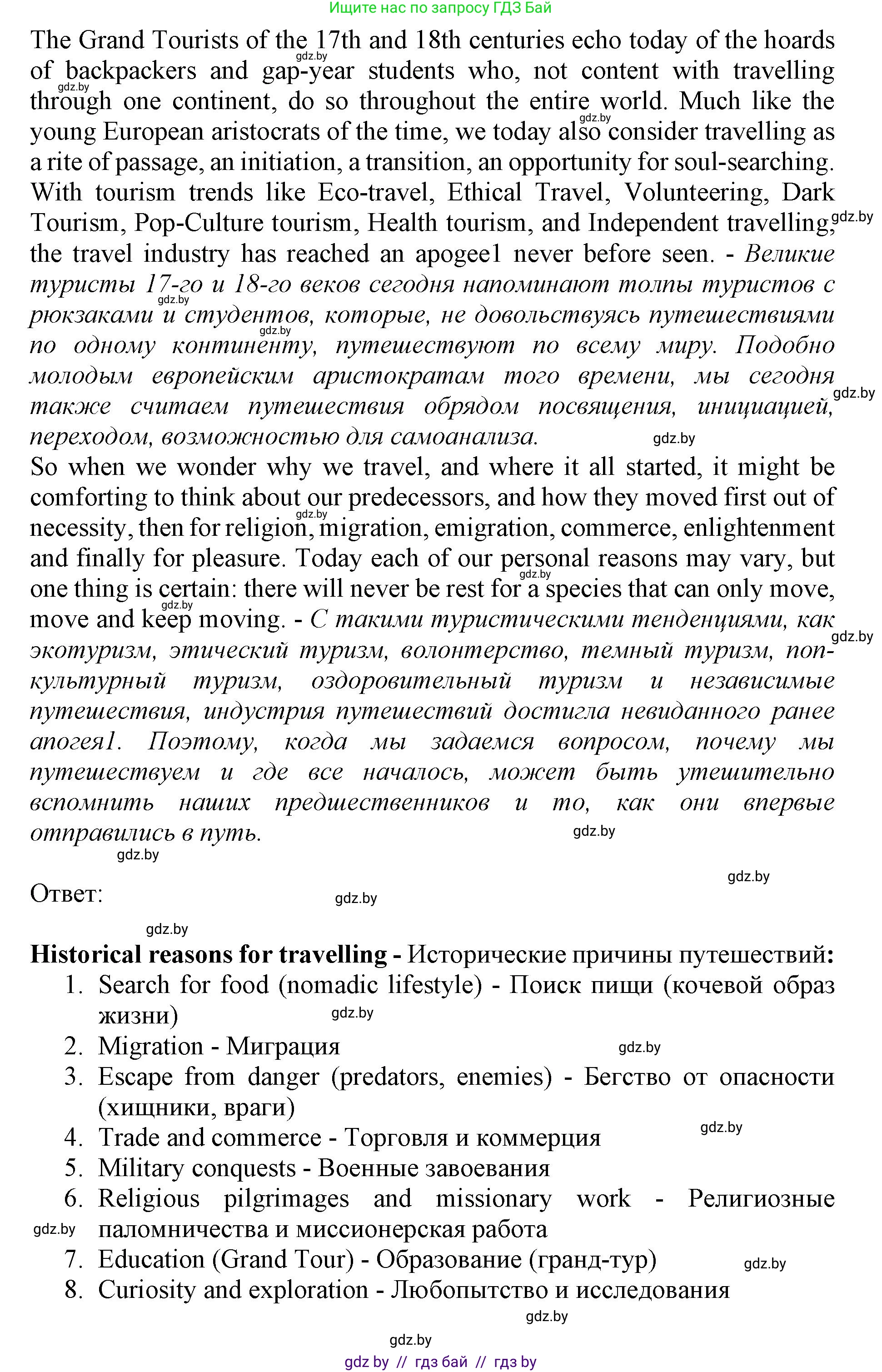
The Grand Tourists of the 17th and 18th centuries echo today of the hoards of backpackers and gap-year students who, not content with travelling through one continent, do so throughout the entire world. Much like the young European aristocrats of the time, we today also consider travelling as a rite of passage, an initiation, a transition, an opportunity for soul-searching.
With tourism trends like Eco-travel, Ethical Travel, Volunteering, Dark Tourism, Pop-Culture tourism, Health tourism, and Independent travelling, the travel industry has reached an apogee1 never before seen.
So when we wonder why we travel, and where it all started, it might be comforting to think about our predecessors, and how they moved first out of necessity, then for religion, migration, emigration, commerce, enlightenment, and then for pleasure. Today each of our personal reasons may vary, but one thing is certain: there will never be rest for a species that can only move, move and keep moving.
b. Find derivatives of the following words in the text.
Curious, valuable, peril, nomad, inquisitive, initiate, enlightenment, exploration, facility.
c. Make a list of words that describe people who travel. Add to this list words from previous lessons. Which words can describe you? Can you give an example of a person to match each of these words?
d. Work with a partner. Compare your lists of historical reasons for travelling. Use this list and words in bold to summarise the text. Add a passage that describes the recent changes in tourism and travelling.
Решение 1. №2 (с. 9)

Решение 2. №2 (с. 9)


Решение 3. №2 (с. 9)
a. Прочитайте текст. По мере чтения составьте список причин для путешествий. Чем исторические причины, по которым люди путешествовали, отличаются от современных.
b. Найдите в тексте производные от следующих слов. Curious, valuable, peril, nomad, inquisitive, initiate, enlightenment, exploration, facility.
c. Составьте список слов, описывающих путешествующих людей. Дополните этот список словами из предыдущих уроков. Какие слова могут описать вас? Можете ли вы привести пример человека, соответствующего каждому из этих слов?
d. Работайте в паре. Сравните ваши списки исторических причин для путешествий. Используйте этот список и выделенные жирным шрифтом слова, чтобы кратко изложить текст. Добавьте отрывок, описывающий недавние изменения в туризме и путешествиях.
Ответ:
a.
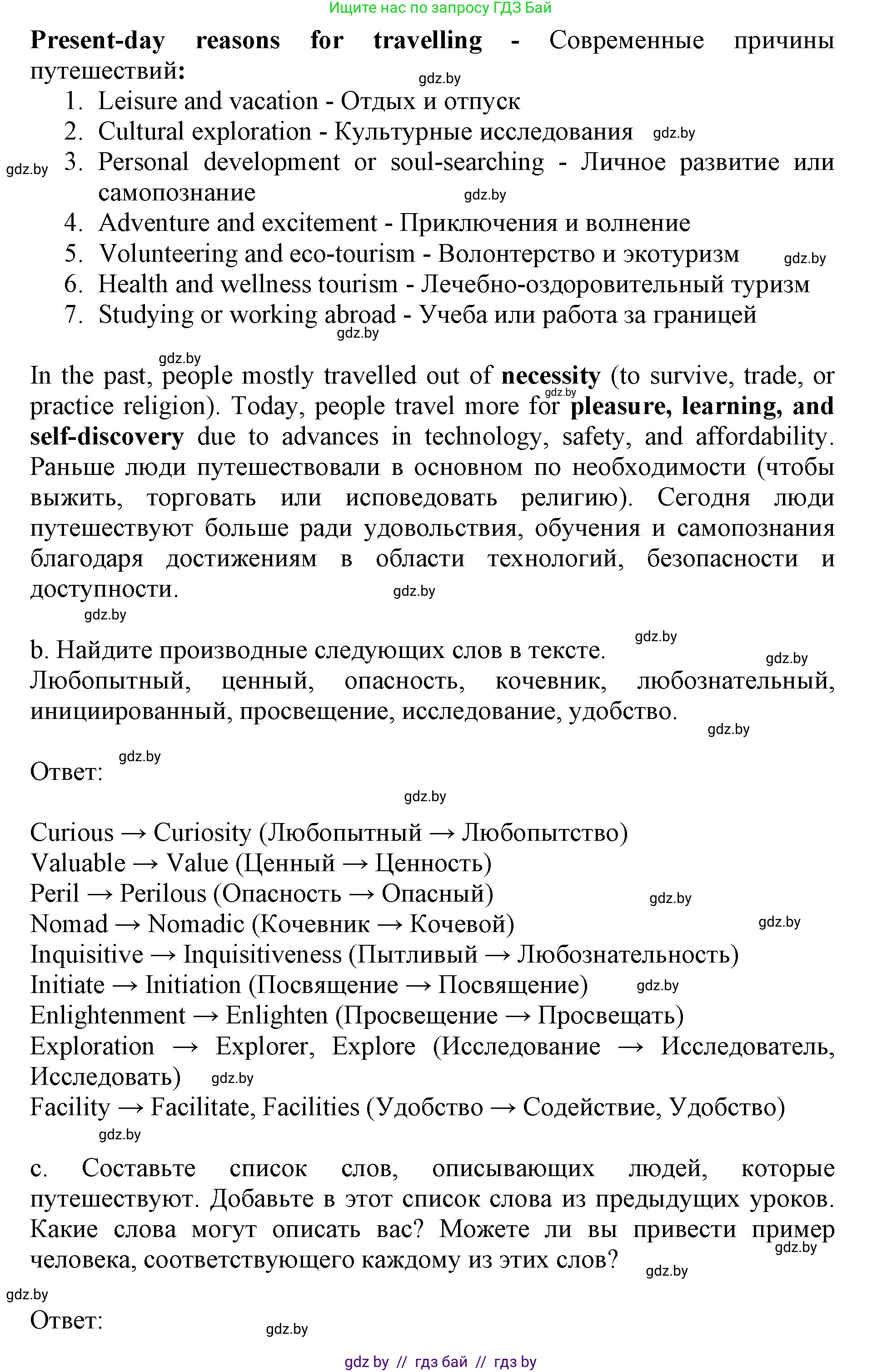
Reasons for travelling:
Historical Reasons: Gathering food and escaping predators; in search of seasonally available plants and game; commerce and trade; movement of troops; leisure (for wealthy classes); religious pilgrimages and missionary work; education and cultural enlightenment (the Grand Tour); exploration and discovery.
Present-day Reasons: Recreation and pleasure; business; as a rite of passage or for soul-searching (e.g., gap-year students); specialized tourism like Eco-travel, Ethical Travel, Volunteering, Dark Tourism, Pop-Culture tourism, and Health tourism.
Difference: Historically, travel was primarily driven by necessity (survival, trade, religion, military aims) and was often dangerous and restricted to certain groups of people. In contrast, present-day travel is much more accessible, safer, and is predominantly motivated by personal pleasure, self-discovery, and a wide variety of special interests.
b.
| Curious | curiosity |
| valuable | value |
| peril | perilous |
| nomad | nomadic |
| inquisitive | inquisitiveness |
| initiate | initiation |
| enlightenment | enlighten |
| exploration | explore, explorers |
| facility | facilitate |
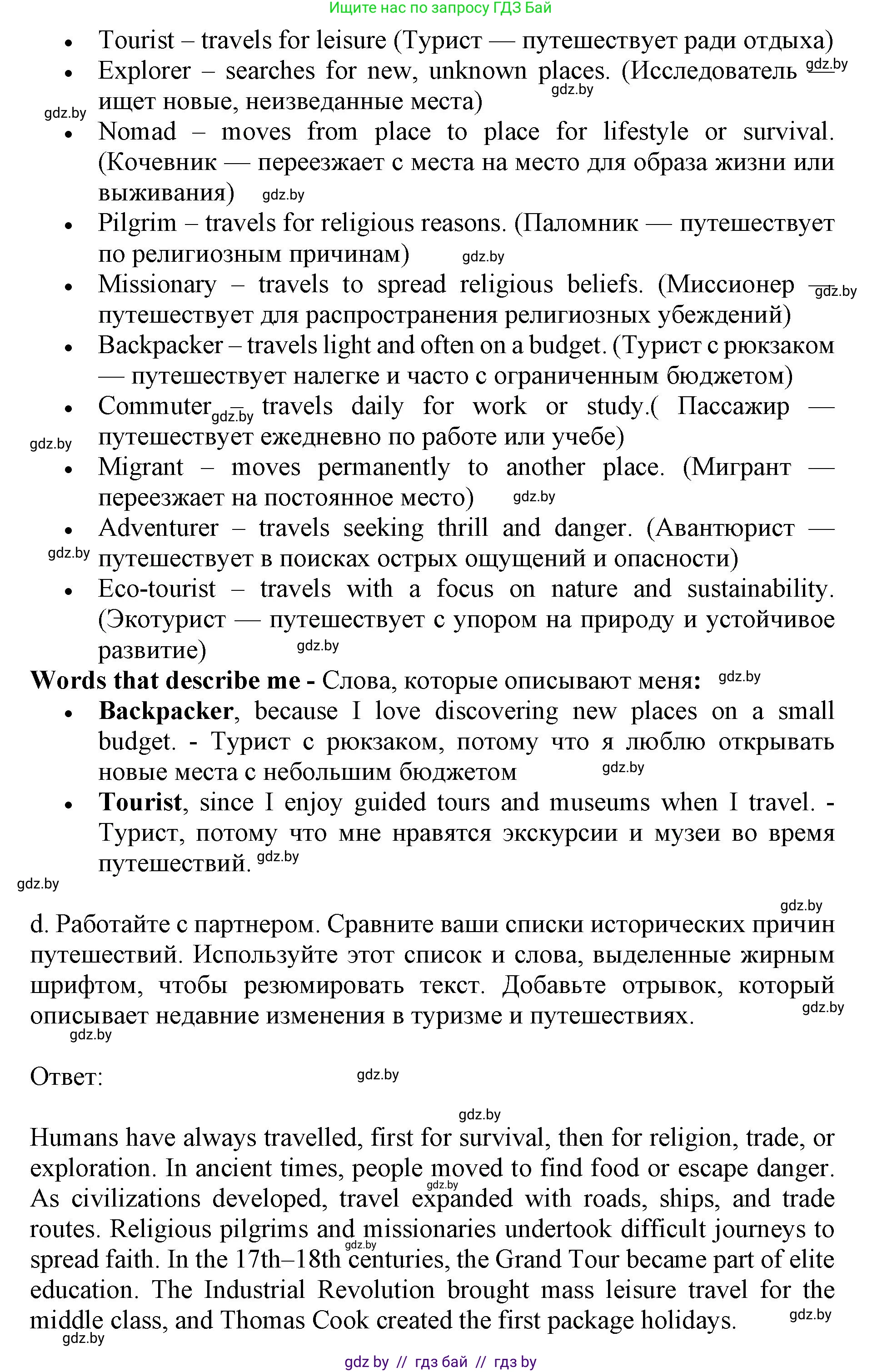
c.
Words that describe people who travel: explorers, pilgrims, missionaries, tourists, backpackers, students, nomads, hunter-gatherers, voyagers, travellers.
Which words can describe you? (This part is subjective. A possible answer is:) The words that can describe me are tourist and explorer.
Examples of a person to match words:
| Explorer | Leif Eriksson, who sailed to North America. |
| Pilgrim | A person walking the Camino de Santiago for religious reasons. |
| Tourist | A family on a package holiday to Paris. |
| Backpacker | A young student travelling through Southeast Asia on a budget. |
d.
Summary of the text:
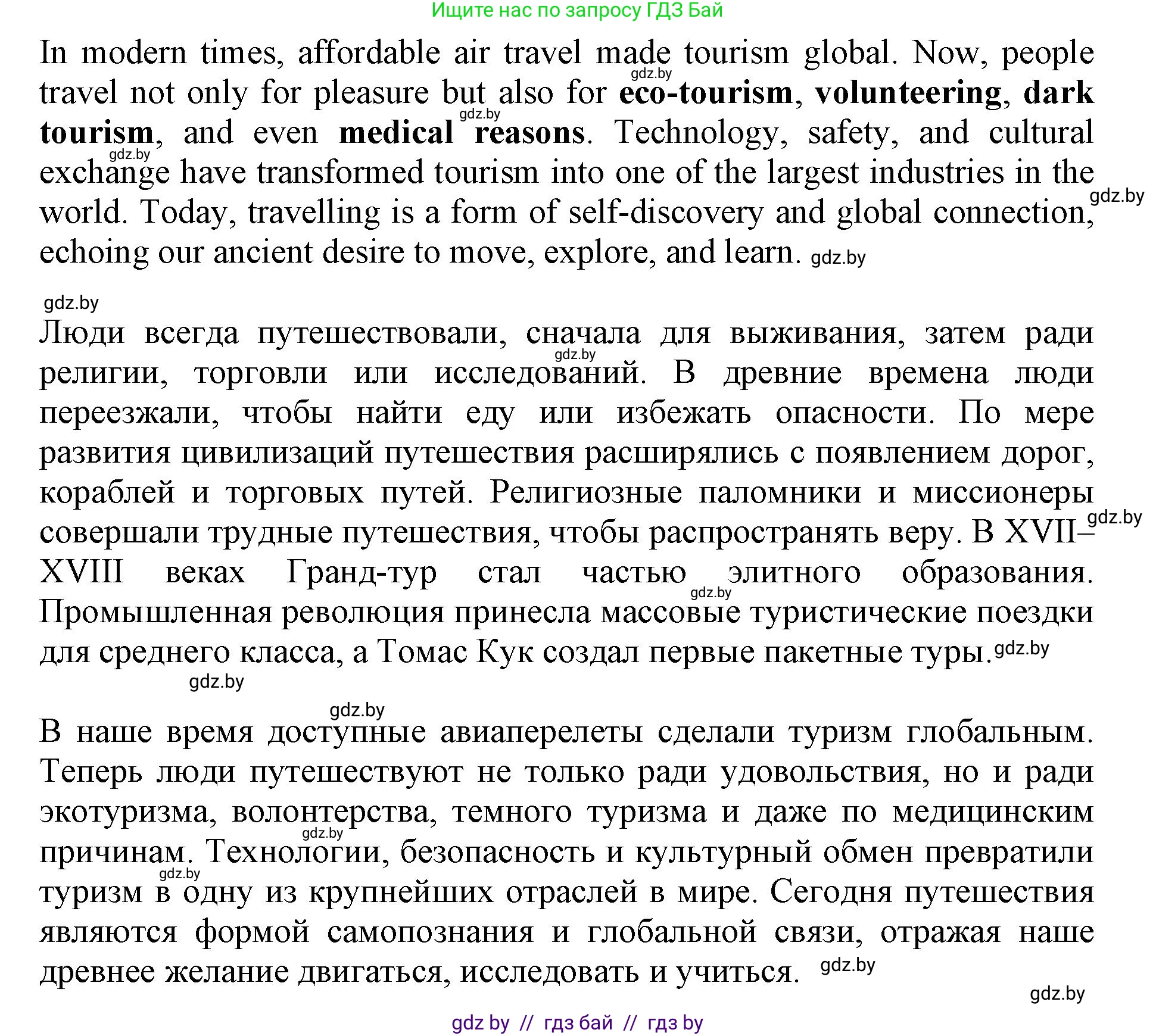
Humans have always been on the move, initially to facilitate gathering food and satisfy their curiosity. Nomadic people moved in search of food, while ancient civilizations built roads to support commerce. The wealthy travelled for leisure, and Vikings undertook perilous voyages to explore new lands. In the Dark Ages, religious convictions drove pilgrims and missionaries to evangelise. Later, the Grand Tour was designed to enlighten young aristocrats and expose them to masterpieces. The 19th century revolutionised travel, with pioneers like Thomas Cook creating the first package holiday for recreational purposes. Modern travel with air fare echoes the past, with today's backpackers often seeing their journeys as a rite of passage or initiation, helping the tourism industry reach its apogee.
Passage on recent changes:
Recent changes in tourism have been largely driven by digital technology and a shift in mindset. The internet has empowered independent travellers, while social media has created new "must-see" destinations based on photographic appeal. Simultaneously, there is a growing awareness of the impact of travel, leading to a rise in sustainable and ethical tourism, where travellers seek more authentic, local experiences and aim to minimize their environmental footprint.
Перевод:
a.
Причины для путешествий:
Исторические причины: Сбор пищи и спасение от хищников; в поисках сезонно доступных растений и дичи; коммерция и торговля; передвижение войск; досуг (для богатых классов); религиозные паломничества и миссионерская деятельность; образование и культурное просвещение (Гранд-тур); исследования и открытия.
Современные причины: Отдых и удовольствие; бизнес; как обряд посвящения или для самопознания (например, студенты в академическом отпуске); специализированный туризм, такой как эко-туризм, этический туризм, волонтерство, дарк-туризм, поп-культурный туризм и оздоровительный туризм.
Разница: Исторически путешествия были в первую очередь обусловлены необходимостью (выживание, торговля, религия, военные цели), часто были опасны и доступны лишь определенным группам людей. В отличие от этого, современные путешествия гораздо более доступны, безопасны и преимущественно мотивированы личным удовольствием, самопознанием и широким разнообразием особых интересов.
b.
| Curious (любопытный) | curiosity (любопытство) |
| valuable (ценный) | value (ценность) |
| peril (опасность) | perilous (опасный) |
| nomad (кочевник) | nomadic (кочевой) |
| inquisitive (любознательный) | inquisitiveness (любознательность) |
| initiate (начинать) | initiation (посвящение) |
| enlightenment (просвещение) | enlighten (просвещать) |
| exploration (исследование) | explore (исследовать), explorers (исследователи) |
| facility (удобство) | facilitate (способствовать) |
c.
Слова, описывающие путешествующих людей: исследователи, паломники, миссионеры, туристы, бэкпекеры, студенты, кочевники, охотники-собиратели, мореплаватели, путешественники.
Какие слова могут описать вас? (Эта часть субъективна. Возможный ответ:) Слова, которые могут описать меня, — это турист и исследователь.
Примеры людей, соответствующие словам:
| Исследователь | Лейф Эрикссон, который доплыл до Северной Америки. |
| Паломник | Человек, идущий по Пути Святого Иакова по религиозным причинам. |
| Турист | Семья в пакетном туре в Париже. |
| Бэкпекер | Молодой студент, путешествующий по Юго-Восточной Азии с ограниченным бюджетом. |
d.
Краткое изложение текста:
Люди всегда были в движении, изначально чтобы способствовать сбору пищи и удовлетворять свое любопытство. Кочевые народы передвигались в поисках еды, в то время как древние цивилизации строили дороги для поддержки торговли. Богатые путешествовали для досуга, а викинги предпринимали опасные плавания, чтобы исследовать новые земли. В Тёмные века религиозные убеждения побуждали паломников и миссионеров проповедовать Евангелие. Позже Гранд-тур был создан, чтобы просвещать молодых аристократов и знакомить их с шедеврами. XIX век революционизировал путешествия, а такие пионеры, как Томас Кук, создали первый пакетный отдых в рекреационных целях. Современные путешествия с оплатой авиабилетов перекликаются с прошлым, и сегодняшние бэкпекеры часто рассматривают свои поездки как обряд посвящения или инициацию, помогая туристической индустрии достичь своего апогея.
Отрывок о недавних изменениях:
Недавние изменения в туризме в значительной степени были вызваны цифровыми технологиями и сдвигом в мышлении. Интернет расширил возможности независимых путешественников, в то время как социальные сети создали новые «обязательные для посещения» места на основе их фотографической привлекательности. Одновременно растет осознание влияния путешествий, что приводит к росту устойчивого и этического туризма, в рамках которого путешественники ищут более аутентичные, местные впечатления и стремятся минимизировать свой экологический след.
Другие задания:

Помогло решение? Оставьте отзыв в комментариях ниже.
Присоединяйтесь к Телеграм-группе @gdz_by_belarus
ПрисоединитьсяМы подготовили для вас ответ c подробным объяснением домашего задания по английскому языку за 11 класс, для упражнения номер 2 расположенного на странице 9 к Учебник (Student's book) 2022 года издания для учащихся школ и гимназий.
Теперь на нашем сайте ГДЗ.ТОП вы всегда легко и бесплатно найдёте условие с правильным ответом на вопрос «Как решить ДЗ» и «Как сделать» задание по английскому языку к упражнению №2 (с. 9), авторов: Демченко (Наталья Валентиновна), Бушуева (Эдите Владиславовна), Севрюкова (Татьяна Юрьевна), Лапицкая (Людмила Михайловна), Романчук (Вероника Романовна), учебного пособия издательства Вышэйшая школа.