 gdz.by


I. Reading, страница 176, часть 2 - гдз по английскому языку 9 класс учебник Демченко, Юхнель

Авторы: Демченко Н. В., Юхнель Н. В., Романчук В. Р., Малиновская Е. А., Севрюкова Т. Ю.
Тип: Student's book (Учебник)
Издательство: Вышэйшая школа
Год издания: 2022 - 2026
Уровень обучения: повышенный
Часть: 2
Цвет обложки: белый, фиолетовый
ISBN: 978-985-06-3444-3 (ч. 1), 978-985-06-3471-9 (ч. 2), 978-985-06-3443-6 (общ.)
Допущено Министерством образования Республики Беларусь
Популярные ГДЗ в 9 классе












Часть 2. Progress check. Unit 9. Progress check - страница 176.
 III. Speaking
I. Reading (с. 176)
Условие. I. Reading (с. 176)
скриншот условия


| Communicative area | testing your reading, listening, and speaking skills |
I. READING
1. Read the article and say in 2–3 sentences what it is about.
What is the most important thing a scientist needs?
There is no simple answer. We can think of three important things. First, it is asking questions. Most scientists are inspired by wanting to understand how things in the world work. That means they start by asking questions. The questions might be driven by curiosity about something amazing in nature, like “Why do stars look like they’re twinkling?” or “Why do these birds have such fancy feathers?” Or they might be driven by wanting to help communities (or even the whole world) with a problem, like “How can we keep this river healthy?” or “What can we do about climate change?”
But all good scientific questions have something in common: they will point scientists towards some sort of investigation they can do to try and find out an answer. Scientists investigate in many different ways. Some examples are observing how animals behave in the wild, measuring how plants grow over time, doing an experiment in a lab, or using a computer to create a virtual version (called a simulation) of a black hole.
Second, it is finding answers. Different scientific questions call for different sorts of answers. Here are some examples (asked by curious kids!).
Why do onions make you cry? How do ants walk on the ceiling? These questions call for explanations: telling us why or how something works the way it does.
Could octopuses evolve until they take over the world and travel in space? This question calls for some explanation about octopuses and also a prediction about what might (or might not) happen in the future.
How many stars are there in space? This question calls for a number (but it helps if the answer explains a bit, too).
How do scientists investigate the world to find answers? It often takes a lot of training and some creativity. There is a thing called the scientific method which you can think of as a sort of recipe for doing science. It goes like this:
1. ask a question
2. come up with a guess, called a hypothesis ([haɪˈpɒθəsɪs] – гипотеза / гiпомэзэа) about an answer to your question
3. do an experiment to test your hypothesis
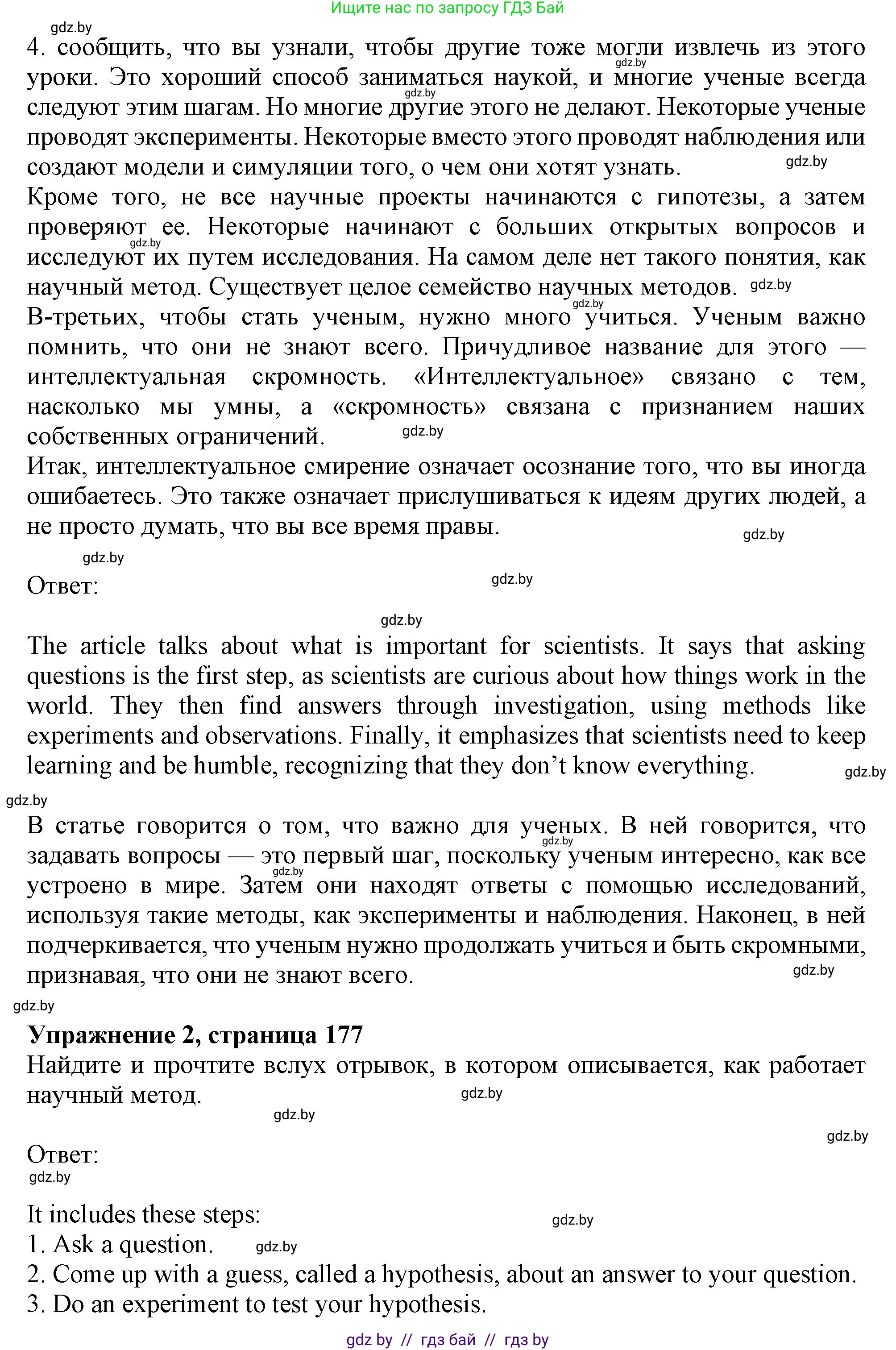
4. report what you learnt, so others can learn from it too.
This is a good way to do science, and many scientists always follow these steps. But many others don’t. Some scientists do observations instead, or create models and simulations of the things they want to learn about.
Also, not all scientific projects start with a hypothesis and then test it. Some start with big open-ended questions and investigate them by exploring. There is really no such thing as the scientific method. There is a whole family of scientific methods.
Third, becoming a scientist takes a lot of learning. It is important for scientists to keep in mind they don’t know everything. A fancy name for this is intellectual humility ([hjuːmɪˈlɪti] – скромность / сціпласць). “Intellectual” has to do with how clever we are, and “humility” has to do with recognising our own limits.
So, intellectual humility means being aware that you’ll sometimes get things wrong. It also means listening to other peoples’ ideas rather than just thinking you’re right all the time.
2. Find and read aloud the extract which describes how a scientific method works.
3. What sorts of answers do scientists try to find?
4. What is important for a scientist?
Решение. I. Reading (с. 176)


Решение 2. I. Reading (с. 176)


Решение 3. I. Reading (с. 176)
1. Прочитайте статью и скажите в 2-3 предложениях, о чем она.
Ответ: This article is about the three most important things a scientist needs. These are asking questions, finding answers through investigation, and having intellectual humility, which means being open to being wrong and listening to others.
Перевод: Эта статья о трех самых важных вещах, которые нужны ученому. Это умение задавать вопросы, находить ответы с помощью исследований и обладать интеллектуальной скромностью, что означает быть готовым признать свою неправоту и прислушиваться к другим.
2. Найдите и прочитайте вслух отрывок, который описывает, как работает научный метод.
Ответ: There is a thing called the scientific method which you can think of as a sort of recipe for doing science. It goes like this:
1. ask a question
2. come up with a guess, called a hypothesis ([haɪˈpɒθəsɪs] – гипотеза) about an answer to your question
3. do an experiment to test your hypothesis
4. report what you learnt, so others can learn from it too.
Перевод: Существует вещь, называемая научным методом, которую можно представить как своего рода рецепт для занятий наукой. Он выглядит так:
1. задайте вопрос
2. выдвиньте предположение, называемое гипотезой ([haɪˈpɒθəsɪs] – гипотеза), об ответе на ваш вопрос
3. проведите эксперимент, чтобы проверить вашу гипотезу
4. сообщите о том, что вы узнали, чтобы другие тоже могли из этого извлечь урок.
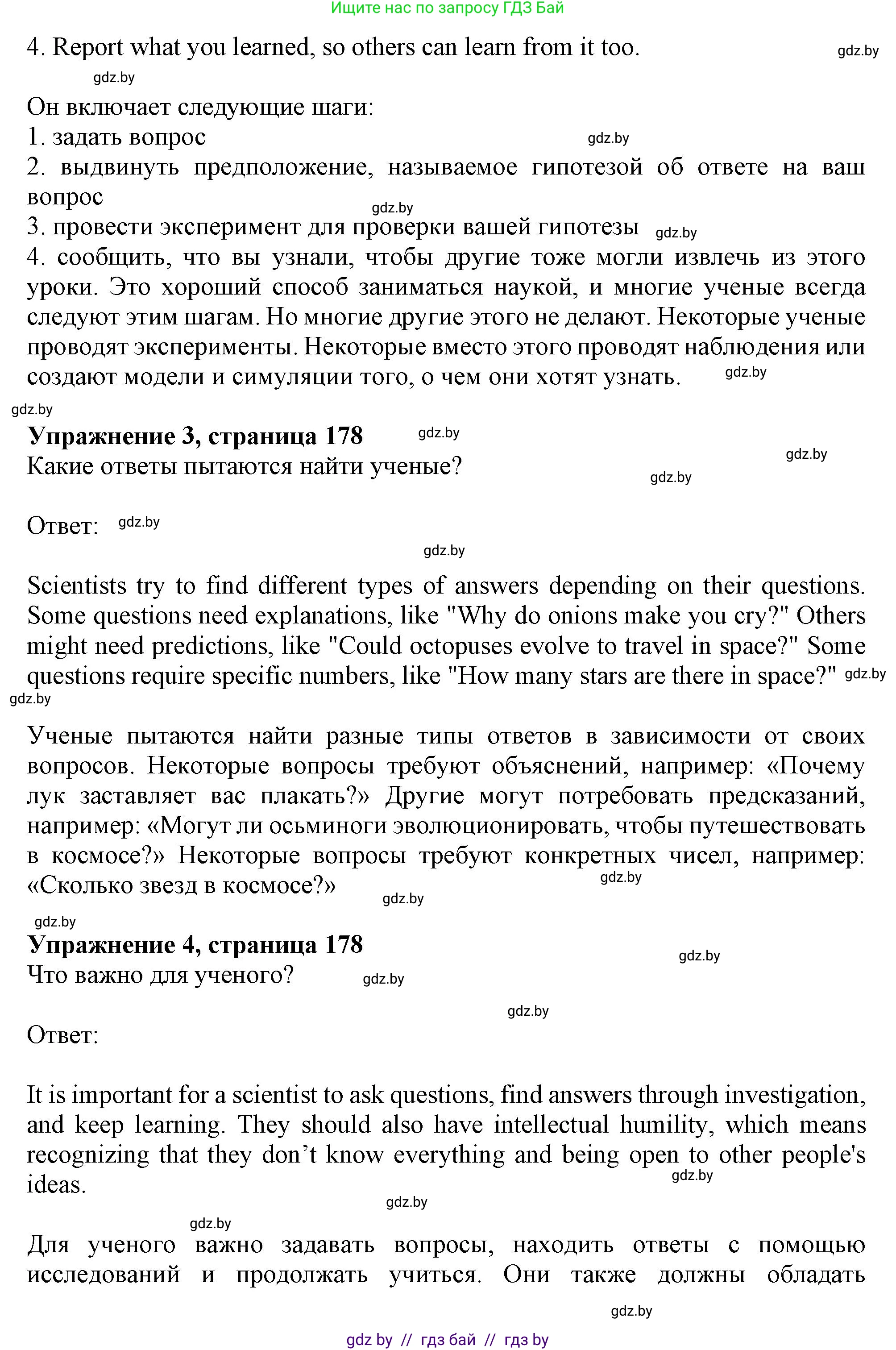
3. Какие виды ответов пытаются найти ученые?
Ответ: Scientists try to find different sorts of answers, including explanations (telling why or how something works), predictions about what might happen in the future, and answers that are a number.
Перевод: Ученые пытаются найти разные виды ответов, включая объяснения (рассказывающие, почему или как что-то работает), прогнозы о том, что может произойти в будущем, и ответы в виде числа.
4. Что важно для ученого?
Ответ: According to the text, it is important for a scientist to ask questions, to find answers, and to have intellectual humility. This means being aware that you can be wrong and listening to other people's ideas.
Перевод: Согласно тексту, для ученого важно задавать вопросы, находить ответы и обладать интеллектуальной скромностью. Это означает осознание того, что вы можете ошибаться, и умение прислушиваться к идеям других людей.
Другие задания:

III. Speaking
стр. 171I. Reading
стр. 172II. Listening
стр. 173III. Speaking
стр. 173I. Reading
стр. 174II. Listening
стр. 175III. Speaking
стр. 175I. Reading
стр. 176II. Listening
стр. 178III. Speaking
стр. 1781
стр. 1792
стр. 1793
стр. 1824
стр. 1821
стр. 183
к содержанию
список заданийПомогло решение? Оставьте отзыв в комментариях ниже.
Присоединяйтесь к Телеграм-группе @gdz_by_belarus
ПрисоединитьсяМы подготовили для вас ответ c подробным объяснением домашего задания по английскому языку за 9 класс, для упражнения I. Reading расположенного на странице 176 для 2-й части к Учебник (Student's book) 2022 года издания для учащихся школ и гимназий.
Теперь на нашем сайте ГДЗ.ТОП вы всегда легко и бесплатно найдёте условие с правильным ответом на вопрос «Как решить ДЗ» и «Как сделать» задание по английскому языку к упражнению I. Reading (с. 176), авторов: Демченко (Наталья Валентиновна), Юхнель (Наталья Валентиновна), Романчук (Вероника Романовна), Малиновская (Елена Александровна), Севрюкова (Татьяна Юрьевна), 2-й части повышенный уровень обучения учебного пособия издательства Вышэйшая школа.